Marine & offshore · Egypt

Marine geotechnical investigation in Egypt

Offshore and nearshore borehole drilling, undisturbed marine sampling and in-situ testing for ports, breakwaters, offshore piers and coastal protection works — from the Mediterranean coast and Nile Delta to the Suez Canal.

Overview

Marine works leave no margin for uncertainty

Piles are long, loads are high and remediation offshore is punishingly expensive. In Egyptian waters the challenge is rarely reaching depth; it is recovering samples of usable quality from soft, sensitive Delta deposits where disturbance destroys the very strength and compressibility data the design depends on.

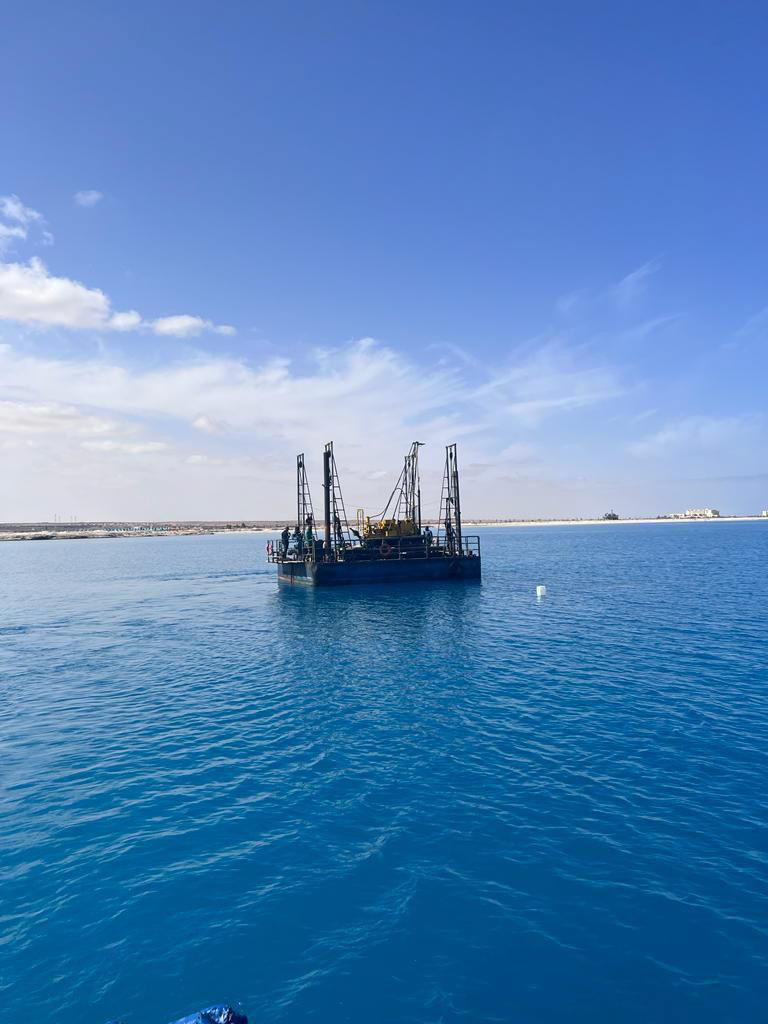
Horema works nearshore and offshore from floating pontoons, jack-up platforms and vessels, using dedicated marine sampling equipment. The marine capability pairs with the same in-house laboratories used onshore, so samples move from seabed to test bench without the delays that degrade sample quality.

Horema has supported Egypt's major dredging and marine contractors across two decades of port construction — from container terminals and breakwaters to the deep boreholes of the New Suez Canal programme.

Offshore geotechnical drilling over water on an Egyptian marine investigation project

Where it applies

Marine structures we investigate for

Ports & container terminals

Reclamation fill, quay walls and container stacking areas demand verified bearing and settlement parameters. Horema investigated the Dekhela reclamation and container terminal and provides continuous quality control on fill, aggregate and concrete during construction.

Offshore piers & jetties

Long piers concentrate high loads on piles founded through soft seabed deposits. The 1,550 m offshore pier investigation at Abu Qir and the piers at Gargoub and Bernice Ports are typical of this scope.

Breakwaters & coastal protection

Breakwater and revetment design depends on seabed strength and the stability of foundation layers under wave loading. On the Nile Delta coastal resilience programme, Horema delivered offshore sampling within a Dutch–Egyptian consortium alongside Van Oord and Marine Sampling Holland.

Canals, dredging & deepening works

Deep boreholes for the New Suez Canal expansion demonstrated the depth capacity of the rig fleet in marine conditions, supporting dredging, deepening and bank-stability design.

How we work over water

From seabed to test bench

Every result stays linked to the position and depth it came from, so the marine dataset can be reviewed as one coherent ground model alongside the onshore record.

Offshore borehole drilling

Rotary drilling from floating pontoons, jack-up platforms and vessels, with casing advanced through the water column and loose seabed deposits to keep the bore stable.

Undisturbed marine sampling

Thin-wall piston and push sampling of soft, sensitive Delta clays and silts, handled to preserve the strength and compressibility the design depends on.

In-situ testing over water

SPT, vane shear and permeability testing executed from the marine spread, with depths referenced to a fixed datum so results tie directly to the seabed profile.

Laboratory testing of marine soils

Classification, consolidation, strength and chemical testing in Horema's in-house laboratories, so samples move from seabed to test bench without the delays that degrade sample quality.

Common questions

Marine geotechnical investigation, answered

How is offshore soil investigation carried out in shallow coastal water?

From floating pontoons or jack-up platforms anchored over the borehole position. Casing is advanced through the water column and loose seabed deposits, then drilling, sampling and in-situ testing proceed much as on land, with depths referenced to a fixed datum.

Why does sample quality matter so much in marine investigation?

Egyptian offshore ground is often soft, sensitive deltaic clay and silt. Disturbance destroys the very strength and compressibility data the design depends on, so undisturbed sampling technique and fast transport to the laboratory decide whether settlement and stability predictions can be trusted.

Where has Horema carried out marine geotechnical work?

Along the Mediterranean coast and Nile Delta, in Alexandria and Abu Qir, at Dekhela, Gargoub and Bernice Ports, and on the Suez Canal — including deep boreholes for the New Suez Canal expansion and the 1,550 m offshore pier investigation at Abu Qir.

Can you work to international partner protocols?

Yes. On the Nile Delta coastal resilience programme, Horema delivered offshore and nearshore sampling within a Dutch–Egyptian consortium alongside Van Oord and Marine Sampling Holland, following data and testing protocols agreed across the consortium so results were directly comparable with partner datasets.

Planning marine or offshore works?

Send the site location, water depths and the structures planned — we will scope the offshore and nearshore investigation required. See also our offshore & nearshore investigation service and marine & port project experience.

Request a scope