Geotechnical engineering · Egypt

Geotechnical engineering in Egypt

Horema has investigated Egyptian ground since 1980 — from Delta soft clays and North Coast calcareous sands to Red Sea rock and offshore seabed. Site investigation, testing and foundation advice under one roof.

Overview

Geotechnical engineering in Egypt turns on ground that changes sharply over short distances: normally consolidated Delta clays, aggressive saline groundwater along the coast, karstic limestone inland and reclaimed fill across new urban zones. Design assumptions carried over from one governorate rarely survive the next.

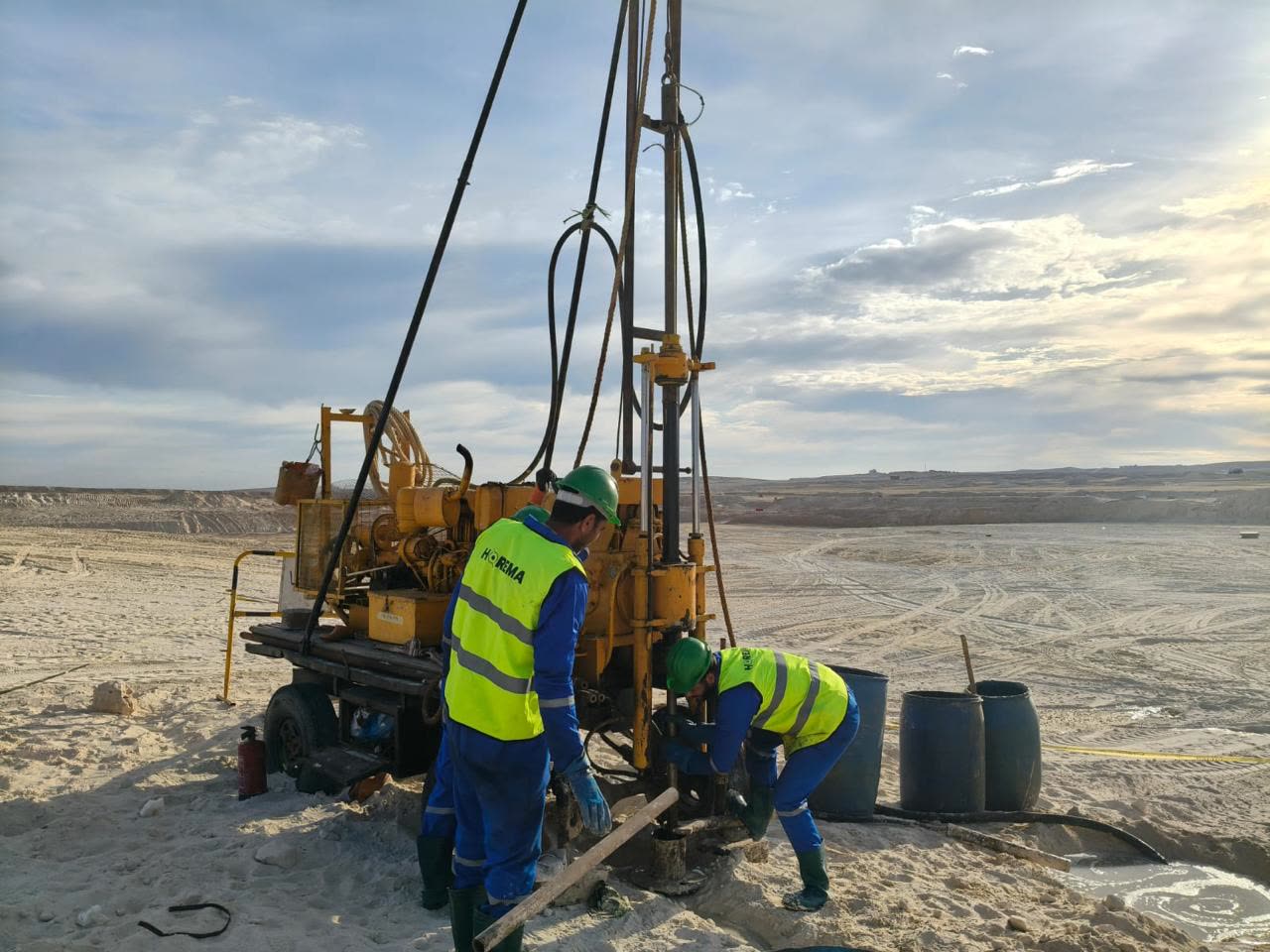
Horema scopes and executes the full chain — drilling and sampling, in-situ testing, accredited laboratory work, and interpretive reporting with foundation recommendations — with 12 rotary rigs, in-house laboratories and a permanent engineering team working to ASTM and BS standards.

Work spans onshore, nearshore and offshore sites for infrastructure, marine, industrial, energy and large-scale urban developments across the country.


Horema laboratory technicians running soil classification tests on samples from an Egyptian site investigation

Ground conditions by region

Egyptian ground, region by region

Cairo & the New Administrative Capital

Stiff overconsolidated clays, Nile terrace sands and gravels, and locally aggressive groundwater. Deep boreholes, SPT profiling and chemical testing support raft and piled foundation design for high-rise and infrastructure work.

Alexandria & the North Coast

Calcareous sands, sabkha pockets and shallow saline groundwater. Investigation focuses on settlement, liquefaction screening and sulphate/chloride attack on buried concrete.

Nile Delta & Nearshore

Soft to very soft normally consolidated silty clays over deltaic sands. Consolidation testing, vane shear and piezometer installation drive ground improvement and embankment design.

Red Sea, Sinai & the Western Desert

Rock, cemented sands and karstic limestone. Rotary coring, rock strength testing and cavity screening support resort, industrial and energy developments in remote terrain.

Capability

What we bring to a site

  • 12 rotary drilling rigs for onshore, nearshore and remote-desert access
  • Offshore and nearshore geotechnical drilling from pontoons and dedicated marine spreads
  • In-situ testing: SPT, plate load, CBR, permeability, vane shear, density and moisture
  • In-house soil, rock, aggregate, concrete, water and chemical laboratories
  • Factual and interpretive geotechnical reports with foundation recommendations
  • Digital deliverables including AGS-format borehole and test data
  • Satellite terrain and ground-deformation analysis integrated with ground data

Explore

Geotechnical services

Common questions

Geotechnical engineering in Egypt, answered

What does a geotechnical engineering company in Egypt actually deliver?

A scoped ground investigation, executed fieldwork and laboratory programme, and a geotechnical report that states the ground model, design parameters and foundation recommendations for the structures planned on the site.

Which standards are applied?

Fieldwork, laboratory testing and reporting follow ASTM and BS standards, with the Egyptian Code of Practice referenced where a project or authority requires it.

How long does a geotechnical investigation take?

A typical building plot with 6-10 boreholes runs one to two weeks of fieldwork with laboratory testing and reporting following. Large infrastructure, marine and desert campaigns are programmed case by case.

Do you cover offshore and marine sites?

Yes. Horema carries out nearshore and offshore geotechnical drilling and sampling from floating pontoons and dedicated marine equipment, including work in the Nile Delta offshore zone.

Planning a project in Egypt?

Send the site location, the structures planned and your programme — we will scope the geotechnical investigation and testing required.

Request a scope